


Lanzerwald Republic
| Lanzerwald Republic Confoederatio Aemilia Republic of Sankt Ludwigshafen Enlightened Realm of Greater Walstadt | |||
| |||
| Motto: Together in the Lanzerwald | |||
| Anthem: A Forest | |||

| |||
| Capital | Stadt Sankt Ludwigshafen | ||
| Largest city | # Sankt Rosa
| ||
| Official language(s) | South Cibolan Saxon | ||
| Official religion(s) | No state religion | ||
| Demonym | Lanzerwalder | ||
| - Adjective | Lanzerwalder | ||
| Government | Single-party socialist state | ||
| - Heads of state |
| ||
| - Minister-Präsidentin | Hedy von Rossmarkt | ||
| - Legislature | Volksrat | ||
| Establishment | XII.1751 AN
| ||
| Population | 13,244,997 (1723 census)
| ||
| Currency | Lanzerwald Mark (𐌻𐌼) | ||
| Calendar | Norton Calendar | ||
| Time zone(s) | CMT-9 | ||
| Driving side | right | ||
| Track gauge | 1,435 millimeters | ||
| National website | staat.lr | ||
| National forum | staat.lr/forum | ||
| National animal | Pink spotted nutcracker | ||
| National food | Cucumber slices | ||
| National drink | Carbonated water | ||
| Abbreviation | LR (MOS-1) LWR (MOS-2) | ||


| Ethical laws in Lanzerwald Republic | |
| Abortion: legal and covered by health insurance | |
| Alcohol: legal for adults, with strict restrictions | |
| Cannabis: legal for adults, with strict restrictions | |
| Capital punishment: illegal, not performed | |
| Corporal punishment: illegal, not performed | |
| Gambling: illegal | |
| Gun laws: illegal for private persons and entities | |
| LGBTQIA+ rights: strong protection of rights | |
| Prostitution: legal, coupled with strong persecution of trafficking |
The Lanzerwald Republic (Istvanistani, South-Cibolan Saxon: 𐍂𐌴𐍀𐌿𐌱𐌻𐌹𐌺 𐌻𐌰𐌽𐌶𐌴𐍂𐍅𐌰𐌻𐌳, or Republik Lanzerwald) was a short-lived nation in south-eastern Cibola. The nation was a direct continuation of the Confoederatio Aemilia, which was renamed after the 1751 military coup in the Confoederatio Aemilia. It was a single-party socialist state, governed by the Sozialprogressive Einheitspartei des Lanzerwalds. Internationally, the nation was associated with the Xäiville Convention and PRIMA. In 1758, the Confoederatio Aemilia]] was restored.
Other names
The Lanzerwald Republic also used the names of its predecessor states, Confoederatio Aemilia, Republic of Sankt Ludwigshafen and Enlightened Realm of Greater Walstadt and used the flags associated with these predecessor states synonymously to the flag of the Lanzerwald Republic. All federal government buildings that were able to place enough flagpoles were instructed to fly the flags of all these predecessor states to signify the long history of the republic, going back to the first rule of Ludwig von Blutwasser over Walstadt in the 1624, the Ludwiggian diaspora resulting in the founding of Sankt Ludwigshafen in 1680, the Union of Oudorp in 1709 and the creation of the Confoederatio Aemilia in 1723 during which all of the Lanzerwald was first united under one banner. The narrative being that these nations were stepping stones towards the current Lanzerwald Republic.
-
 Flag of the Confoederatio Aemilia
 -
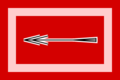 Flag of the Republic of Sankt Ludwigshafen
 -
 Flag of the Enlightened Realm of Greater Walstadt


Jurisdictions
The Lanzerwald Republic was divided into several Länder (Cibolan Saxon, Istvanistani translation: states), these are:
- Hauptstadtbezirk Sankt Ludwigshafen, since 1680, re-established in 1753
- Land Taktwinkel, since 1723
- Insula Aemilia, since 1723
- Land Sankt Rosa, since 1724
- El Dorado, since 1729
- Aemilian Alrig, since 1731
- Rossmark, since 1733
- Land Weisenburg, since 1741
- Walstadt and Light, since 1743
Politics
The Lanzerwald Republic was founded on the principles of social-progressivism, a movement that arose during the Aemilian era, with the Sozialprogressive Einheitspartei Aemilias, in the Lanzerwaldian era the Sozialprogressive Einheitspartei des Lanzerwalds. A common idea in social-progressivism in the Lanzerwald was that "all should work together for the benefit of all". Further ideas are the independence of the nation and the sovereignty held by its people, which also included the idea that the nation should maintain some level of autarky. All people in the republic had a right to work, housing and food. Human rights, such as the autonomy of one's own body were held in high regard, as was the care for the environment. While rejecting the idea that people live for their own good, social-progressivism also supported people's pursuit of happiness, as long as it didn't hurt other people.
Freedom of religion existed in the Lanzerwald Republic, but religious organisations were expected to follow the norms and values of social-progressivism, this included a prohibition of foreign religious organisations operating within the Lanzerwald, including religious organisations associating themselves with foreign church structures. It also included prohibitions on things such as homophobia, sexism and racism being promoted, or prescribed, even in holy scriptures. For Nazarene sects, the Prinsessenvertaling, a redacted version of the holy scripture was the most widely used, foreign translations of the holy scriptures did often not comply to Lanzerwald law and couldn't be used.
Sovereignty was held by the people of the Lanzerwald, and vested in the Volksrat, housing in the capital city of Volksburg. This was an indirectly elected body of party members, representing the people and chosen by the local chapters of the Sozialprogressive Einheitspartei. The Volksrat appointed a minister-president and approved their ministers, and could remove the ministers and minister-president as well.
Citizenship
Starting in VI.1753, the Lanzerwald Republic had a single-citizenship requirement, naturalisations took place with the requirement that the new citizen renounces all their previous citizenships. Citizens who already held multiple citizenship at that date had until VI.1755 to decide which citizenship they wish to keep, if they did not make a choice their citizenship of the Lanzerwald Republic was revoked.
ActivityCheck
| 2023 | 2024 | 2025 | 2026 | |
|---|---|---|---|---|
| January | ✓ * | ✓ * | ✓ | |
| February | ✓ * | ✓ * | ✓ | |
| March | ✓ * | ✓ * | ✓ | |
| April | ✓ * | ✓ * | ✓ | |
| May | ✓ * | ✓ * | ✓ | |
| June | ✓ * | ✓ * | ✓ | |
| July | ✓ * | ✓ * | ||
| August | ✓ * | ✓ * | ||
| September | ✓ * | ✓ * | ||
| October | ✓ * | ✓ * | ||
| November | ✓ * | ✓ * | ||
| December | ✓ * | ✓ * | ✓ |
(* as the Confoederatio Aemilia)


