
The Nouveau Wave
 A Nouveau Wave student rally at the University of Lausanne, 1722 AN. | |
| Overview | |
|---|---|
| Also known as | New Alexandrian counterculture movement |
| First emergence | 1721 AN |
| Location | Nouvelle Alexandrie |
| Type | Counterculture, social, and political movement |
| Character | |
| Political alignment | Left-wing, progressive, anti-establishment; issue-based rather than partisan |
| Principal themes |
Anti-war and peace Housing and economic justice Civil liberties Individual rights and sexuality Environmentalism Avant-garde arts |
| History | |
| Major revivals |
1739 AN (Spring Crisis of 1739) 1750 AN (university protests) 1757 AN–present (recession) |
| Notable figures |
Sofia Marquez Ismael Miranda y Garcia Tupaq Cucamanga Maria Chancha |
| Associations | |
| Associated cohort | Crisis Generation |
| Associated organizations |
Committee for a New Wave Movement for University Freedom |
| Electoral vehicle (from 1750s) | DSP within the AJNA |
| Recurring anti-establishment counterculture movement in Nouvelle Alexandrie since 1721 AN | |
The Nouveau Wave, also known as the New Alexandrian counterculture movement, is a significant and emerging anti-establishment cultural, social, and political phenomenon that first emerged in 1721 AN in Nouvelle Alexandrie. It arose in response to a growing weariness towards war among the New Alexandrian public, particularly as the Wars of the Disinherited were concluding, the procurement scandal involving Secretary of Defense Felipe de Almagro and the Federal Humanist Party, and the ongoing military intervention in the Hurmu civil conflict. This movement gained momentum due to a perceived lack of potent leftist political alternatives and the dominance of the Federal Humanist Party and the Humanist movement in New Alexandrian politics. After the FHP's precarious electoral victory in the 1723 general elections, leading to a FHP minority government, the movement fell into a serious crisis of confidence until the arrival of Sofia Marquez, Ismael Miranda y Garcia, and Tupaq Cucamanga as a key national movement leaders in 1727 AN and 1728 AN, focused on housing, social, and economic issues.
The Nouveau Wave originated as a small student activist movement within various prestigious educational institutions in Nouvelle Alexandrie, such as the University of Cárdenas, the University of Lausanne, Port Karsten University, and Parap National College. The catalyst for the mobilization of left-wing students was the electoral crisis and declining support for the Social Democratic and Liberal Alliance (SDLA) and Nouvelle Alexandrie's military intervention in the Hurmu civil conflict. Students associated with the youth wings of the SDLA and local labor unions began organizing protests on college campuses, including sit-ins, lectures, and public demonstrations, to oppose the involvement in Hurmu. This movement quickly spread across numerous campuses, leading to large-scale boycotts and demands for the withdrawal of Nouvelle Alexandrie from Hurmu, as well as the lifting of economic sanctions. Notably, students launched a controversial campaign to purchase Hurmu Credit Union bonds to financially support the socialist-Umraist government of Prime Minister Annika Raudsepp in Hurmu, which concluded in 1720 AN.
Since its inception, the Nouveau Wave has transcended college campuses and gained the attention of young people, liberals, progressives, and social democrats throughout Nouvelle Alexandrie. The movement has expanded its focus to encompass various issues, particularly protests against the ongoing international conflict with the Confederacy of the Dispossessed, the response to the Recession of 1726, and against the government's response and bailouts in the property sector crisis. As the movement has evolved, it has also encompassed discussions, works, and action related to individual rights, human sexuality, women's rights, traditional authority, human rights, and the exploration of psychoactive substances or other recreational drugs.
The Nouveau Wave has given rise to new cultural forms and a dynamic subculture that celebrates experimentation, individuality, sexuality, and freedom. This spirit of experimentation is particularly prominent in the works of New Alexandrian musicians, filmmakers, and other artists associated with the Nouveau Wave. Creative individuals, authors, and thinkers across various disciplines continue to contribute to the development of this nascent movement, often centered around or near college campuses in Nouvelle Alexandrie. Rather than a single episode, the Nouveau Wave has proved a recurring current in New Alexandrian public life: it first cohered in 1721 AN, mobilized against the failed coup of the Spring Crisis of 1739, revived on the nation's campuses in the university protests of 1750, and re-emerged as a political force during the Recession of 1757 as the country approached the general election of 1759.
Origins
The origins of the Nouveau Wave movement can be traced back to various interconnected societal dynamics. One major factor was the ongoing war situation. Despite public support for the fight against the Dispossessed, the prolonged warfare and its repercussions had led to a mounting sense of fatigue and disenchantment among the citizens. Simultaneously, the corruption scandals involving the Emergency Shipbuilding Program further eroded the public's trust in the incumbent government, contributing to political disillusionment.
Sociopolitical Context
Within this context, the lack of strong leftist political alternatives became increasingly prominent. Existing political forces were seen as incapable of adequately addressing societal concerns or of presenting a compelling vision for change. This void in the political landscape, coupled with escalating societal discontent, set the stage for the rise of the Nouveau Wave movement.
Intellectual origins
Alongside the campus mobilizations, the movement drew an intellectual strand from the salons of Café du Taureau in the Les Artistes quarter of Punta Santiago, where the philosopher Sofia Huaman and the economist Jean-Michel Lavergne hosted a recurring gathering known as Les Soirées Progressives. It was there, in late 1721 AN, that participants drafted and first read publicly the Manifesto for a Technocratic Future, a text fusing socialist economics, environmental stewardship, and technocratic governance that supplied the early Nouveau Wave with much of its vocabulary. The café's association with progressive folk music and avant-garde art made it an informal headquarters for the movement's founding generation.
Manifestations
The Nouveau Wave movement manifests itself in various forms. It is characterized by widespread social activism, grassroots political mobilization, and a flourishing of experimental and avant-garde arts. This vibrant creativity is fuelled by a collective desire to challenge the status quo and to reimagine societal norms. Public demonstrations, performances, and other forms of collective actions are common occurrences. They often center around themes such as peace, social justice, government transparency, and radical socio-economic change. Alternative media outlets and online platforms play a crucial role in mobilizing support and disseminating Nouveau Wave's ideas.
In the arts, the Nouveau Wave movement has stimulated a renaissance of countercultural expressions, encompassing music, visual arts, literature, and theatre. These artistic endeavors often explore themes of resistance, subversion, and utopian ideals.
-
 Maria Chancha, a prominent Wechua student leader, speaks at a sit-in in the Royal University of Parap, 1723 AN.
-
-
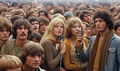
 Celine Poirot, a prominent DSP student leader speaks to the crowd at a student mass protest near the University of Punta Santiago campus, 1722 AN.
-
 Charles Hildy, a prominent student leader and labor activist speaks on the campus of Port Karsten University in the Isles of Caputia, 1722 AN.
-
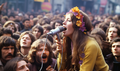 Coco-Rosie Martinez, a student activist at University of Cardenas, speaks at a student protest against the Federal Humanist Party, in 1722 AN.


Political organizations
The Nouveau Wave was never a single organization but a network of overlapping groups, several of which became durable fixtures of the movement.
Committee for the New Wave
The Committee for the New Wave was the first wave's central organizing body, through which Sofia Marquez and the other national leaders who emerged in the later 1720 ANs coordinated the movement's scattered campus chapters. It functioned as the movement's strategy and coordination hub rather than as a formal party, setting the pattern of loose, network-based organization that the movement kept through its later revivals.
New Labor Youth
New Labor Youth linked the campus movement to the organized labor movement, drawing on the youth wings of the trade unions that had backed the early anti-war organizing. Student and labor activists such as Charles Hildy worked through it to connect university protests with workplace and housing campaigns, giving the movement a foothold beyond the college towns.
Flower Power Collective
The Flower Power Collective was a loose network within the movement organized around its environmental and anti-war concerns and its defense of personal freedom. It was associated in particular with the movement's environmentalism and with the counterculture around communal living and recreational drug use.
Arbona Alliance
The Arbona Alliance was a regional grouping of Nouveau Wave chapters that coordinated the movement's activity outside its original strongholds in the capital and the major university towns.
Inti's Children
Inti's Children was the strand of the movement rooted in Wechua identity and student leadership, its name invoking Inti, the Wechua sun. It carried the concerns of Wechua students and other traditional communities into the wider counterculture, and Wechua student leaders such as Maria Chancha were among its prominent figures.
Arts and culture
The movement expressed itself as much through culture as through protest, leaving a mark on several New Alexandrian art forms.
Literature
The Nouveau Wave gave its name to a literary era. New Century literature, often called Nouveau Wave literature, is treated in surveys of New Alexandrian literature as the body of work written from 1720 AN onward, marked by political engagement, formal experimentation, and the concerns of the counterculture. The political thriller Shadows of a New Dawn (1729 AN), whose protagonist is an activist of the movement, is among the era's representative works.
Journalism
The movement was covered sympathetically by parts of the center-left press, notably The Libertad Gazette, which had reported on Nouveau Wave activity among students since 1727 AN. It also relied heavily on alternative and anonymous online media to organize and to circulate material the mainstream outlets would not carry. That same anonymous-forum ecosystem also carried hostile disinformation: it was on the board TruthWatchers that the false claim of misused public funds first spread, a smear later used to justify Operation Faun in 1750 AN.
Theater
Street theater and performance were among the movement's characteristic forms of protest, staged in public squares and on campuses rather than in conventional venues. The tactic was most visible during the Spring Crisis of 1739, when Nouveau Wave networks organized street performances and other public actions in support of the constitutional government against the attempted coup.
Music
Music was central to the Nouveau Wave's public identity, spanning the progressive folk scene that grew up around venues such as Café du Taureau and the rock and synthpop acts that played the movement's larger gatherings. Song was a common vehicle for its themes of peace, social justice, and personal freedom, and performers moved fluidly between concert stages and protest rallies.
Music festivals
The Massina Festival of Music and Arts, held annually since 1722 AN, became the movement's best-known cultural gathering, drawing tens of thousands of attendees to performances by acts associated with the counterculture alongside activism workshops and its recurring "Great Sit-In". The festival helped carry Nouveau Wave music and politics to audiences well beyond the university towns where the movement began.
Art
Visual art was one of the movement's most durable forms of expression, from the anti-coup art installations of the Spring Crisis of 1739 to the protest murals of 1750 AN, when student artists projected corruption headlines and images of hardship onto university buildings during the Parap protests. The movement's visual language, mixing avant-garde technique with direct political messaging, became a recognizable style in New Alexandrian public art.
History
The Nouveau Wave has surfaced in several distinct waves across four decades of New Alexandrian politics. Each revival has been set off by a moment of national crisis and has drawn on the same counterculture identity. Each has also left behind institutions and cultural forms that outlasted the mobilization that produced them.
First wave and crisis of confidence (1721–1728)
The first wave grew out of the anti-war campus organizing of 1720 AN and 1721 AN, which opposed the intervention in the Hurmu civil conflict and the procurement scandal surrounding the Emergency Shipbuilding Program. After the FHP's narrow victory in the general election of 1723, the movement lost momentum and entered what its own participants called a crisis of confidence, lacking a national leadership or a program beyond opposition to the war. The arrival of Sofia Marquez, Ismael Miranda y Garcia, and Tupaq Cucamanga as national figures in 1727 AN and 1728 AN gave the movement a coherent agenda focused on housing, the Recession of 1726, and the government's handling of the property sector crisis, and turned a loose campus network into an organized counterculture.
The Bitter Spring of 1730
The Nouveau Wave's reach extended beyond Nouvelle Alexandrie's borders. Its example inspired the Bitter Spring of 1730 AN, a wave of youth unrest in the Raspur Khanate and the Suren Confederacy whose participants espoused the movement's ideology.
The 1739 eruption
The movement re-emerged during the Spring Crisis of 1739, the failed coup d'état of the third month of 1739 AN. As army factions moved against the constitutional government of King Sinchi Roca II and Premier Marissa Santini, the Nouveau Wave mobilized its urban artistic networks in support of the civil authorities, organizing street performances, underground radio broadcasts, and anti-coup art installations, while the Federation of New Alexandrian Students coordinated occupations of administrative buildings across a dozen campuses as communication hubs and safe houses. The crisis and its aftermath gave rise to the Crisis Generation, the cohort that came of age during the coup and that would become the movement's demographic core.
The 1750 revival
The largest revival came with the New Alexandrian university protests of 1750, often called the Nouveau Wave Revival of 1750 AN, which began on 24.V.1750 AN and drew thousands of students to the Royal University of Parap, the University of Punta Santiago, and the University of Cárdenas. Unlike the earlier waves, which had aligned with progressive and social-democratic parties, this revival rejected party politics outright; when organizers from established parties tried to attach themselves to a Parap gathering, students turned them away with the slogan that they were "all the same machine with different paint". Out of the protests grew the Movement for University Freedom (MUF), a student organization devoted to university autonomy, academic freedom, and police accountability.
The revival also produced the movement's sharpest confrontation with the state. Former Nouveau Wave activists Alexander Melas and Serina Bakhshi, who had defected to the Federal Humanist Party government in 1744 AN, were serving as senior secretaries when they authorized Operation Faun, the clearing of the student encampments launched on 10.VII.1750 AN. Federal Gendarmerie units used tear gas, baton rounds, and mounted police, and detained dozens of students without charge. Footage of a mounted officer lassoing and dragging the student Sofia Reyes across the cobblestones became the most-watched video in the Federation's history, and public support for the operation collapsed. The solidarity slogan "We Are All Sofia", raised at a vigil for Reyes, became the emblem of the revival.
Repression and the courts
The Nouveau Wave's confrontation with the security state produced a line of constitutional litigation that reshaped New Alexandrian civil-liberties law. The movement's veteran leader Sofia Marquez had been taken into federal custody in 1749 AN, a year before the Operation Faun crackdown, and held without charge under Article 17 of the Federal Law Enforcement Enhancement Act, 1747, the security statute the FHP government had passed under Premier Juan Pablo Jimenez. In Marquez v. Council of State, decided 24.V.1751 AN, the High Court struck the Act's core security provisions by a vote of six to three, holding that the Bill of Rights, Liberties, and Responsibilities binds all law and cannot be suspended by statute or executive declaration, and that indefinite detention without charge, the exclusion of habeas corpus, and warrantless records-compulsion and interception were void from the moment of judgment. The majority opinion of Chief Justice Élisée Pierrat observed that "the liberties of the Federation are not suspended by the gravity of the hour, for it is precisely in the gravest hours that they are tested". Marquez was ordered released; her counsel, Martina Vásquez, went on to argue the companion cases.
The ruling anchored a short trilogy of security decisions. In In re Detentions at Fort Esperanza (1751 AN) the High Court held that detainees still held under the already-voided Article 17 had to be released without case-by-case delay, and in Cordier v. Council of State (1752 AN) it struck a judicial-tenure clause that had left lower-court judges removable at the pleasure of the Crown. Together the cases turned the movement's grievances against the security state into settled constitutional doctrine.
The movement and the 1759 general election
The Recession of 1757, which followed the collapse of the alexandrium market late in 1757 AN, reopened the political space the Nouveau Wave had occupied in its earlier waves. The downturn put the long-governing FHP administration of Premier José Manuel Montero on the defensive and gave the opposition, led by Marcos Ferreira Gonçalves of the Democratic Socialist Party (DSP), an economic argument to press. The term-limits referendum of 1758, which would have barred Montero from seeking another term, was rejected by voters, leaving him free to stand for a third term at the general election of 1759.
Unlike the movement's earlier surges, the resurgence heading into 1759 AN flowed into an established electoral vehicle. The Movement for University Freedom, which had grown out of the 1750 crackdown, became a recruiting ground for the DSP, whose youth wings drew organizers and voters from it and whose ground operations it had backed. The DSP contests elections as the larger partner in the Alliance for a Just Nouvelle Alexandrie (AJNA) alongside the Wakara People's Party, and the alliance's platform, the People's Deal, carried civil-liberties provisions written as a direct answer to Operation Faun, restricting police tactics against protesters and strengthening oversight of the Federal Gendarmerie. The Crisis Generation cohort formed the movement's demographic base, and the FHP derided the network of advocacy groups that had grown out of the Nouveau Wave as a false civil society aligned with the AJNA.
The confrontation carried into the campaign itself. Through the later months of 1758 AN, cadres of the Humanist Vanguard staged torchlit marches carrying lassos and nooses through the university quarters of Cárdenas and Parap and outside the home of Sofia Reyes, which the party presented as a show of strength before the election. The marches ended after the Federal Capital District Court granted Reyes a protective order and directed the Federal Gendarmerie to enforce it, and the backlash reached the government itself when Vice-President Fred Strong was confirmed to have blessed them.
The lineage sat uneasily with the movement's own history. The 1750 revival had defined itself by rejecting party organizers, and the channeling of countercultural energy into a partisan alliance revived the question the movement had never resolved, whether its aims were better served from outside the party system or from within it. As the 1759 AN campaign opened, the Nouveau Wave entered it not as a party but as a current whose votes, activists, and grievances several parties sought to claim.
The movement's earlier confrontations with the Humanist Vanguard resurfaced in the campaign's civil-liberties argument, as the clashes that had preceded the 1729 election were recalled alongside Piti Gándara's new paramilitary-displays bill.[1]
Impact and Reactions
The Nouveau Wave movement has had a profound impact on Nouvelle Alexandrie's society. It has influenced public discourse, stimulated political debates, and contributed to a greater awareness and discussion of societal issues. Reactions to the Nouveau Wave are mixed. While many view it as a necessary and vital response to societal issues, others view it with skepticism or outright hostility. The incumbent government, in particular, has been critical, viewing the Nouveau Wave as a disruptive force.
Beginning in the fourth month of 1722 AN the Federal Humanist Party began organising nation-wide protests and boycotts against perceived manifestations of the "New Wave". Tactics included identifying and isolating figures associated with the moment, allowing them to be cornered by members of the Humanist Vanguard for collective struggle sessions where the individuals were made subject to the criticisms and indignation of the group, before being invited to recant of their erroneous opinions and mistaken beliefs as a path back to rehabilitation into society.
The movement's influence persisted during its confrontations with the state. Certain strands of civic nationalism of New Alexandrianism that took shape after the Spring Crisis of 1739, particularly those on the political left, count the Nouveau Wave among its formative influences, and within a generation ideas and figures with roots in the counterculture had passed into the mainstream of some of the country's parties and institutions, even as the movement itself remained a source of contention in national politics.
See also
- Spring Crisis of 1739
- New Alexandrian university protests of 1750
- Movement for University Freedom
- Marquez v. Council of State
- Crisis Generation
- Alliance for a Just Nouvelle Alexandrie
- We Are All Sofia
- Confederacy of the Dispossessed
- Emergency Shipbuilding Program
- Operation Purple Splendor
- Operation Purple Shroud
- Operation Sable Shield
- Operation Lefthand Punch
- Wars of the Dispossessed
- ^ "Gándara makes civil liberties a test of the campaign", NBC Newsfeed, 22.VII.1759 AN.


