

Çakari succession crisis: Difference between revisions
No edit summary |
No edit summary |
||
| Line 46: | Line 46: | ||
Since in this case the outcome was not yet decisive, it was decided to at least establish a government. Jayanti Sinha, who had been Grand Vizier earlier, was asked to become Grand Vizier again. She accepted on the condition that she would not become a candidate for ruling sultana. For most delegates, it was out of the question to accept a woman as head of state. As they did not manage to settle the succession, a new meeting was scheduled after a few days of reflection. Although there was optimism about the independent continuation of Çakaristan, there was concern about the vacant throne. | Since in this case the outcome was not yet decisive, it was decided to at least establish a government. Jayanti Sinha, who had been Grand Vizier earlier, was asked to become Grand Vizier again. She accepted on the condition that she would not become a candidate for ruling sultana. For most delegates, it was out of the question to accept a woman as head of state. As they did not manage to settle the succession, a new meeting was scheduled after a few days of reflection. Although there was optimism about the independent continuation of Çakaristan, there was concern about the vacant throne. | ||
=== The best candidate === | |||
That evening, Amir stared tearfully at the full moon. He felt the pressure to accept the crown, but he really didn't want to. Catherine embraced him and waited for Amir to say something. "I really don't want it, not for you, not for our children and I don't think I can do it," said Amir. Catherine took Amir by the hand and together they sat on the bed. She said, "As far as I have known your brother, he was also very much in charge of his role. He knew how burdensome it is, he struggled with succession, precisely because he did not want to burden anyone. Yet there must be someone who could and would carry this burden. Do you know someone who could? Someone without regard to the family. A capable person." Amir thought about it and after a while he said, "Yes, I know someone. But that person is still young, not even Çakari." Catherine interrupted him, "No buts." "Yes, okay. Hakim. He could do this. He was brought up to rule, he has some experience of struggle and if he has something of his father's political instincts, he is the best candidate." Amir answered. "Then it has to be him," Catherine concluded. Amir brightened at the idea. An enormous burden slipped from his shoulders. And he said, "Oh you, great woman!" Catherine burst into laughter and welcomed her husband into her arms. | |||
[[File:HakimbinAlsalam.png|thumb|right|Hakim bin Alsalam, Emir of Arbor]] | |||
The next day, Amir secretly left for Craitabad. On the way, he smiled about his wife, the jewel from the cold north. Hours later, he arrived in Craitabad, where the Emir was staying. The situation in Barikalus was quite complicated. The Republic and Caliphate had been defeated, the country was occupied by three foreign powers. Hakim was actually an Emir without an Emirate. Amir did not know what plans his late brother had with Barikalus. He managed to meet Hakim, who was surprised by the unannounced visit. Amir explained that he wanted to discuss a matter in private, as little publicity as possible the better. After Amir explained the whole thing, he also narrated the conversation with his wife. Hakim looked surprised, but let Amir finish. A silence fell while Hakim thought. "Well, the Grand Assembly must accept me." Hakim began, "There really must be a constitution then, so that a succession crisis does not occur again." Amir nodded in agreement. Hakim stroked his beard, smiled and said, "It's worth a try." | |||
The Grand Assembly had already begun; Amir's absence had already been noticed. Catherine tried to convince people that Amir would be arriving soon. Fortunately, their patience was not tested for too long when Amir and Hakim arrived. The two men walked into the Red Fortress. There was some commotion, some wondering what Hakim had come to do. Amir asked to speak, while Hakim stood aside. "Honourable delegates, this nation needs new energy to move forward vigorously in these times. The issue of succession must be resolved, otherwise an uncertain future awaits. Forces that want to transform, tear apart or otherwise destabilise this nation are lurking. We thank Mutasim al-Baccus, Mahaan Mansabdar, and the Çakari Armed Forces for securing the country. This Grand Assembly must not destroy this important work. So we have to come up with solutions. In the great respect of my brother, in blessed memory, I deeply understand his struggle to sort out the succession. He knew better than anyone how burdening his role was. I therefore urge that this Grand Assembly not be concluded without any perspective on the future of this nation. Here is my contribution: may I ask you to consider the candidacy of Hakim bin Alsalam. This young man may not be from one of our peoples, but he can act as a substitute. Yes, I am not much of a orator, may I ask that Hakim himself may say a few words." | |||
Hakim stepped forward and said, "Honourable delegates, with great respect for the late, Akbar, a true great ruler, I stand here with proper restraint. I have not come here to collect a crown. Amir persuaded me to come here after all. The late emperor came to my country's aid in times of great need, so I am ready to help when his country is in need. Our countries have helped each other more than once. My father sent a fleet to support your fight for independence. The Emperor has helped me by taking care of me and my siblings, in addition to freeing my country from tyranny with arms and men." | |||
"Woven into my blood is the ancestry of four Batavian Kings, twelve Kaisers of Shireroth, four Shahanshahs of Babkha and one Emir of Arbor. As a result, I cannot make any real claim to a throne except the Golden Mango Throne. Only recently have I become Emir, but my Emirate does not yet exist. We express the hope that after the occupation my country will be stabilised enough to exist again as an independent nation. But when my neighbouring country, my most important ally, is in chaos, my heart suffers. All the more so because we owe so much to you and to your late emperor." | |||
"Amir brought me here as a candidate for the throne. The point is whether I am the right man on the throne. On the way here, I listened to Amir talk about the political challenges here. First of all, I plead for a wise constitution. A succession crisis like this must not happen again. In addition, the burden of rulership must be lightened, shared by an elected government under the control of an elected assembly. I also heard with regret that the Çakar family is very much stuck with the failed Great Apollonian Empire. There are sounds of going into exile so that you here can have a free hand in determining the course of this nation. May I plead with you here not to take that step. The Çakar family has cemented this country together, if I may in all modesty contribute something, then this: secure fundamental rights, regulate the rulership of the country, and make sure that the people of Çakar are not left behind." | |||
[[Category:History]] | [[Category:History]] | ||
Revision as of 09:03, 26 January 2022
The Çakari succession crisis of 1704 AN occurred when the Tobu Emperor was assassinated. Since the creation of the sultanate, which formed into the Ultimate Çakar Sultanate, as well as the transition to the Great Apollonian Empire, the succession to the throne has not been formally regulated. It was assumed that Hrithik would succeed his father, but at the time of his father's death, he was only 11 years old.
Background
No Constitution
Sylvania, and later Çakaristan, had no constitution. At the great assembly after the Sylvanian National Awakening, a monarch was elected, namely Abu Çakar as sultan, but no agreement on a constitution. There were several sketches and some things were agreed upon, such as the establishment of the Majlis al-Sultina and a government under a Grand Vizier. But it was precisely about the succession to the throne that there was no agreement.
The Adarani-speaking community advocated male succession through maternal lineage. The Arboric-speaking community advocated strict male succession. Others advocated succession to the eldest child, regardless of gender. And others argued for an elected succession.
After the merger into the Great Apollonian Empire, the succession would be settled in the announced Codex Apollonia. Unfortunately, that constitution was never formally adopted. Therefore, the succession remained undetermined.
Akbar's legacy
Akbar was a strong advocate of incorporating fundamental rights and freedoms into the constitution. His philosophy was: "Fundamental rights and freedoms are not granted by an authority, they are merely protected. For what an authority gives, that authority can take away."
Akbar said several things about succession to the throne, including: "I would not wish the burden of rule on my son" and "A ruler must serve his people, therefore the people must choose their ruler".
Notes for a constitution written by Akbar, with all kinds of considerations and explanations, had been collected into what is called the "Akbar papers".
Void
On 24.XII.1704 AN, the Tobu Emperor, Akbar, was assassinated. This combined with the Second Kildarian Revolution caused uncertainty in the crumbling empire. In all haste, the body of the deceased Emperor was transferred to Agra. The Sultana was reunited with her children in Keruliya. Then they travelled together to Agra to say goodbye to their husband and father. Their convoy was blocked by the many people who had come to Agra to say goodbye to their ruler. Jodha got out of the car and let her children out too. The security guards became very nervous at this decision. She hissed to the head of the guard, "These are the Sultan's people, my people."
The crowd was surprised to see Sultana and her children standing between them. An impressive silence made even the birds hear. The Sultana put her black veil over her head, took her children by the hand and started walking towards the Red Fortress. The crowd mourned with her, forming a path so that she was allowed to pass undisturbed and with great respect. Silently, the Sultanic family walked towards the Red Fortress. No one had yet been allowed into the fortress to see the Emperor. His coffin was set up in front of the throne, where he was seated as Sultan. Jodha burst into tears and great sorrow at the coffin. The rest of the Çakar family was present, Manikarnika and Rani Champavati rushed to hold Jodha as she collapsed to the ground.
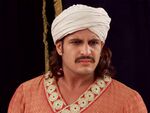
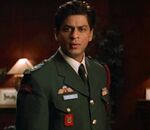
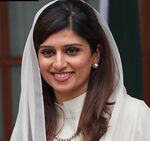
A triumvirate was formed to hold the Çakari community together, which consisted of:
- Amir Çakar, brother of the late Emperor,
- Mutasim al-Baccus, Mahaan Mansabdar (general of the Çakari Armed Forces) and
- Jayanti Sinha, former Grand Vizier.
While Amir ensured a dignified farewell to the Emperor, Mutasim al-Baccus with the Çakari Armed Forces secured the territory of the Çakari community. Jayanti Sinha organised a meeting of the Grand Assembly. As after the Sylvanian National Awakening, the Grand Assembly would determine the future.
-
 Amir Çakar
 -
 Mutasim al-Baccus
 -
 Jayanti Sinha


Grand Assembly

The Grand Assembly met in the Red Fortress of Agra. The issue of succession could be discussed. Mutasim al-Baccus, Mahaan Mansabdar, spoke fervently: "Don't think that this time of relative stability in the Çakari part of the Great Apollonian Empire is a reason to disagree for all eternity! This nation needs a strong leader, someone to lead the people further into the 18th century." Jayanti Sinha, former Grand Vizier, said, "We must do justice to Akbar's legacy. Only His Majesty was not clear about succession. With all due respect to you, Your Majesty Sultana, your children are still too young." Jodha nodded.
"May I ask you, Your Highness, Amir Çakar, are you ready to take the throne?" asked Jayanti. Amir stood up: "When my brother was chosen to be sultan, I was glad that I was not elected. My brother, in blessed memory, made it clear to me several times that the task of sultan is a heavy burden. As a Khan, I taste part of it. That part is more than enough for me". There was dismay among many, for they had placed their hope in Amir. All the delegates entitled to vote filled in their ballot papers. All votes were cast after the ballot papers were collected. The candidates with the most votes were Ümit Çakar, Amir Çakar and Rajesh Avchat. Ümit Çakar, father of Abu and Amir, did not appear to have the support of the delegates who came from west of the Green Border. Amir Çakar received a number of votes, but remained steadfast that he was not a candidate. Rajesh did not get support from the delegates who came from east of the Green Border. The ballot papers were burned so that the delegates were not burdened with their earlier vote.
Since in this case the outcome was not yet decisive, it was decided to at least establish a government. Jayanti Sinha, who had been Grand Vizier earlier, was asked to become Grand Vizier again. She accepted on the condition that she would not become a candidate for ruling sultana. For most delegates, it was out of the question to accept a woman as head of state. As they did not manage to settle the succession, a new meeting was scheduled after a few days of reflection. Although there was optimism about the independent continuation of Çakaristan, there was concern about the vacant throne.
The best candidate
That evening, Amir stared tearfully at the full moon. He felt the pressure to accept the crown, but he really didn't want to. Catherine embraced him and waited for Amir to say something. "I really don't want it, not for you, not for our children and I don't think I can do it," said Amir. Catherine took Amir by the hand and together they sat on the bed. She said, "As far as I have known your brother, he was also very much in charge of his role. He knew how burdensome it is, he struggled with succession, precisely because he did not want to burden anyone. Yet there must be someone who could and would carry this burden. Do you know someone who could? Someone without regard to the family. A capable person." Amir thought about it and after a while he said, "Yes, I know someone. But that person is still young, not even Çakari." Catherine interrupted him, "No buts." "Yes, okay. Hakim. He could do this. He was brought up to rule, he has some experience of struggle and if he has something of his father's political instincts, he is the best candidate." Amir answered. "Then it has to be him," Catherine concluded. Amir brightened at the idea. An enormous burden slipped from his shoulders. And he said, "Oh you, great woman!" Catherine burst into laughter and welcomed her husband into her arms.

The next day, Amir secretly left for Craitabad. On the way, he smiled about his wife, the jewel from the cold north. Hours later, he arrived in Craitabad, where the Emir was staying. The situation in Barikalus was quite complicated. The Republic and Caliphate had been defeated, the country was occupied by three foreign powers. Hakim was actually an Emir without an Emirate. Amir did not know what plans his late brother had with Barikalus. He managed to meet Hakim, who was surprised by the unannounced visit. Amir explained that he wanted to discuss a matter in private, as little publicity as possible the better. After Amir explained the whole thing, he also narrated the conversation with his wife. Hakim looked surprised, but let Amir finish. A silence fell while Hakim thought. "Well, the Grand Assembly must accept me." Hakim began, "There really must be a constitution then, so that a succession crisis does not occur again." Amir nodded in agreement. Hakim stroked his beard, smiled and said, "It's worth a try."
The Grand Assembly had already begun; Amir's absence had already been noticed. Catherine tried to convince people that Amir would be arriving soon. Fortunately, their patience was not tested for too long when Amir and Hakim arrived. The two men walked into the Red Fortress. There was some commotion, some wondering what Hakim had come to do. Amir asked to speak, while Hakim stood aside. "Honourable delegates, this nation needs new energy to move forward vigorously in these times. The issue of succession must be resolved, otherwise an uncertain future awaits. Forces that want to transform, tear apart or otherwise destabilise this nation are lurking. We thank Mutasim al-Baccus, Mahaan Mansabdar, and the Çakari Armed Forces for securing the country. This Grand Assembly must not destroy this important work. So we have to come up with solutions. In the great respect of my brother, in blessed memory, I deeply understand his struggle to sort out the succession. He knew better than anyone how burdening his role was. I therefore urge that this Grand Assembly not be concluded without any perspective on the future of this nation. Here is my contribution: may I ask you to consider the candidacy of Hakim bin Alsalam. This young man may not be from one of our peoples, but he can act as a substitute. Yes, I am not much of a orator, may I ask that Hakim himself may say a few words."
Hakim stepped forward and said, "Honourable delegates, with great respect for the late, Akbar, a true great ruler, I stand here with proper restraint. I have not come here to collect a crown. Amir persuaded me to come here after all. The late emperor came to my country's aid in times of great need, so I am ready to help when his country is in need. Our countries have helped each other more than once. My father sent a fleet to support your fight for independence. The Emperor has helped me by taking care of me and my siblings, in addition to freeing my country from tyranny with arms and men."
"Woven into my blood is the ancestry of four Batavian Kings, twelve Kaisers of Shireroth, four Shahanshahs of Babkha and one Emir of Arbor. As a result, I cannot make any real claim to a throne except the Golden Mango Throne. Only recently have I become Emir, but my Emirate does not yet exist. We express the hope that after the occupation my country will be stabilised enough to exist again as an independent nation. But when my neighbouring country, my most important ally, is in chaos, my heart suffers. All the more so because we owe so much to you and to your late emperor."
"Amir brought me here as a candidate for the throne. The point is whether I am the right man on the throne. On the way here, I listened to Amir talk about the political challenges here. First of all, I plead for a wise constitution. A succession crisis like this must not happen again. In addition, the burden of rulership must be lightened, shared by an elected government under the control of an elected assembly. I also heard with regret that the Çakar family is very much stuck with the failed Great Apollonian Empire. There are sounds of going into exile so that you here can have a free hand in determining the course of this nation. May I plead with you here not to take that step. The Çakar family has cemented this country together, if I may in all modesty contribute something, then this: secure fundamental rights, regulate the rulership of the country, and make sure that the people of Çakar are not left behind."


