


Antican Sea Treaty: Difference between revisions
Created page with "{{Çakaristan Article}} {{Jing article}} The '''Antican Sea Treaty''' between the Ultimate Çakar Sultanate and the Jingdaoese Empire wa..." |
No edit summary |
||
| (One intermediate revision by one other user not shown) | |||
| Line 1: | Line 1: | ||
{{Çakaristan Article}} | {{Çakaristan Article}} | ||
{{Jing article}} | {{Jing article}} | ||
The '''Antican Sea Treaty''' between the [[Çakaristan|Ultimate Çakar Sultanate]] and the [[Great Jing Dynasty|Jingdaoese Empire]] was signed and ratified in 1695 AN. | The '''Antican Sea Treaty''' between the [[Çakaristan|Ultimate Çakar Sultanate]] and the [[Great Jing Dynasty|Jingdaoese Empire]] was signed and ratified in 1695 AN. But with the adoption of the [[Treaty of Raynor's Keep]], this treaty was dissolved. | ||
== Text == | == Text == | ||
| Line 59: | Line 59: | ||
'''Article I'''<br> | '''Article I'''<br> | ||
The Jingdao National Petroleum is granted the exclusive right by the Ultimate Çakar Sultanate to exploit gas resources within the territorial waters and exclusive economic zone of the Antican Sea. | The [[Jingdao National Petroleum]] is granted the exclusive right by the Ultimate Çakar Sultanate to exploit gas resources within the territorial waters and exclusive economic zone of the Antican Sea. | ||
'''Article II'''<br> | '''Article II'''<br> | ||
| Line 67: | Line 67: | ||
'''Article III'''<br> | '''Article III'''<br> | ||
'''1.''' The Jingdao National Petroleum bears the financial risk for gas research, construction and management of the necessary infrastructure to operate the gas and operational costs. <br> | '''1.''' The Jingdao National Petroleum bears the financial risk for gas research, construction and management of the necessary infrastructure to operate the gas and operational costs. <br> | ||
'''2.''' The Jingdao National | '''2.''' The Jingdao National Petroleum organizes that after two Norton years, the required staff consists of at least 50% citizens from the Ultimate Çakar Sultanate. This staff is paid to market-based salary and sufficiently trained for the intended work. | ||
'''Article IV'''<br> | '''Article IV'''<br> | ||
| Line 76: | Line 76: | ||
'''2.''' If the Jingdao National Petroleum goes bankrupt, all rights and obligations in this addendum will lapse. | '''2.''' If the Jingdao National Petroleum goes bankrupt, all rights and obligations in this addendum will lapse. | ||
}}</div> | }}</div> | ||
== Afterneath == | |||
With the acceptance of the Treaty of Raynor's Keep, this treaty was abandoned. The cooperation with Jingdao National Petroleum was converted into a private contract. | |||
[[category:Treaties]] | [[category:Treaties]] | ||
Latest revision as of 07:19, 22 August 2022
The Antican Sea Treaty between the Ultimate Çakar Sultanate and the Jingdaoese Empire was signed and ratified in 1695 AN. But with the adoption of the Treaty of Raynor's Keep, this treaty was dissolved.
Text

Due to common interests in and around the Antican Sea, the Jingdaoese Empire and Ultimate Çakar Sultanate agree on the following articles:
ANTICAN SEA TREATYArticle I – Council
The High Contracting Parties shall set up a Council to ensure compliance with this Convention and to provide a forum for consultation between the High Contracting Parties on all matters relating to the Antican Sea. The seat of the Council shall be in Shanbao.Article II - Sovereignty and territorial integrity
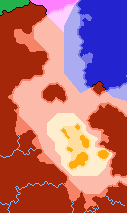
Each High Contracting Party shall respect the independence, sovereignty and territorial integrity of the other party. Territorial integrity includes the territory of a High Contracting Party to the extent acknowledged and published by the Micronational Cartography Society. The territory extends 24 kilometres from the baseline coast of the High Contracting Party. Including the localities where the coastline is deeply indented and cut into, or if there is a fringe of islands along the coast in its immediate vicinity, the method of straight baselines joining appropriate points may be employed in drawing the baseline from which the breadth of the territorial sea is measured.The reserve zone of a High Contracting Party extends 360 kilometres from the baseline coast. The economic and environmental resources within this zone belong fully to that High Contracting Party. In special situations where the territorial waters or the reserve zone of the High Contracting Parties would overlap, the line of separation will be drawn along the midpoint between the baseline of each High Contracting Party.
This has been worked out on a map, which is attached as Appendix A.
Article III - Airspace
Each High Contracting Party commits that any overflight of its airspace by aircraft registered upon the territory of the Other High Contracting Party, whose source and destination are outside the jurisdiction of the Overflown High Contracting Party and which make no intermediate landing upon the territory of the Overflown High Contracting Party, shall be considered to fall outside the remit of customs or immigration regulations and wholly outside the jurisdiction of any Third Parties, without prejudice to the exclusive right of the Overflown High Contracting Party to approve or deny such overflight as it sees fit.The High Contracting Party can set up a Prohibited airspace, an overflight is strictly prohibited. The High Contracting Party informs about Prohibited airspace and appropriate punitive measures follow an overflight of an aircraft registered with the other High Contracting Party.
Article IV – Shipping links
To promote regional cohesion, the High Contracting Parties are setting up shipping links. The ports in and around the Antican Sea are made available for these shipping links.Article V - Ratification
This Treaty enters into force upon its signature and ratification by Both High Contracting Parties in accordance with their respective domestic procedures.
Signed on 2.II.1695 AN:For the Ultimate Çakar Sultanate:
Akbar Çakar
Sultan of Çakaristan
For the Jingdaoese Empire:
Chidao Emperor
Heavenly Light


APPENDIX A

ADDENDUM I
Article I
The Jingdao National Petroleum is granted the exclusive right by the Ultimate Çakar Sultanate to exploit gas resources within the territorial waters and exclusive economic zone of the Antican Sea.Article II
1. The Ultimate Çakar Sultanate is responsible for securing the installations required for the operation and staff of the Jingdao National Petroleum.
2. The Ultimate Çakar Sultanate compensates for any loss of access to gas resources and installations for exploitation.Article III
1. The Jingdao National Petroleum bears the financial risk for gas research, construction and management of the necessary infrastructure to operate the gas and operational costs.
2. The Jingdao National Petroleum organizes that after two Norton years, the required staff consists of at least 50% citizens from the Ultimate Çakar Sultanate. This staff is paid to market-based salary and sufficiently trained for the intended work.Article IV
The profit from the sale of oil, after deduction of the costs from Article III paragraph 1, taxes and export duties, is shared with the Ultimate Çakar Sultanate for 42%.Article V
1. If the Jingdao National Petroleum is taken over by a third party, all rights and obligations in this addendum will be transferred to this third party.
2. If the Jingdao National Petroleum goes bankrupt, all rights and obligations in this addendum will lapse.
Afterneath
With the acceptance of the Treaty of Raynor's Keep, this treaty was abandoned. The cooperation with Jingdao National Petroleum was converted into a private contract.


