

Çakari succession crisis: Difference between revisions
No edit summary |
No edit summary |
||
| Line 31: | Line 31: | ||
* Jayanti Sinha, former Grand Vizier. | * Jayanti Sinha, former Grand Vizier. | ||
While Amir ensured a dignified farewell to the Emperor, Mutasim al-Baccus with the Çakari Armed Forces secured the territory of the Çakari community. Jayanti Sinha organised a meeting of the Grand Assembly. As after the [[Sylvanian National Awakening]], the Grand Assembly would determine the future. | While Amir ensured a dignified farewell to the Emperor, Mutasim al-Baccus with the Çakari Armed Forces secured the territory of the Çakari community. Jayanti Sinha organised a meeting of the Grand Assembly. As after the [[Sylvanian National Awakening]], the Grand Assembly would determine the future. | ||
<gallery widths="150" heights="150"> | |||
Image:AmirCakar.jpg|Amir Çakar | |||
Image:Mutasim al-Baccus.jpg|Mutasim al-Baccus | |||
Image:JayantiSinha.jpg|Jayanti Sinha | |||
</gallery> | |||
== Grand Assembly == | |||
[[File:RedFortressinAgra.jpg|thumb|right|The Red Fortress of Agra]] | |||
The Grand Assembly met in the Red Fortress of [[Agra]]. The issue of succession could be discussed. Mutasim al-Baccus, Mahaan Mansabdar, spoke fervently: "Don't think that this time of relative stability in the Çakari part of the Great Apollonian Empire is a reason to disagree for all eternity! This nation needs a strong leader, someone to lead the people further into the 18th century." Jayanti Sinha, former Grand Vizier, said, "We must do justice to Akbar's legacy. Only His Majesty was not clear about succession. With all due respect to you, Your Majesty Sultana, your children are still too young." Jodha nodded. | |||
"May I ask you, Your Highness, Amir Çakar, are you ready to take the throne?" asked Jayanti. Amir stood up: "When my brother was chosen to be sultan, I was glad that I was not elected. My brother, in blessed memory, made it clear to me several times that the task of sultan is a heavy burden. As a Khan, I taste part of it. That part is more than enough for me". There was dismay among many, for they had placed their hope in Amir. All the delegates entitled to vote filled in their ballot papers. All votes were cast after the ballot papers were collected. The candidates with the most votes were Ümit Çakar, Amir Çakar and Rajesh Avchat. Ümit Çakar, father of Abu and Amir, did not appear to have the support of the delegates who came from west of the [[Green Border]]. Amir Çakar received a number of votes, but remained steadfast that he was not a candidate. Rajesh did not get support from the delegates who came from east of the Green Border. The ballot papers were burned so that the delegates were not burdened with their earlier vote. | |||
Since in this case the outcome was not yet decisive, it was decided to at least establish a government. Jayanti Sinha, who had been Grand Vizier earlier, was asked to become Grand Vizier again. She accepted on the condition that she would not become a candidate for ruling sultana. For most delegates, it was out of the question to accept a woman as head of state. As they did not manage to settle the succession, a new meeting was scheduled after a few days of reflection. Although there was optimism about the independent continuation of Çakaristan, there was concern about the vacant throne. | |||
[[Category:History]] | [[Category:History]] | ||
Revision as of 21:48, 25 January 2022
The Çakari succession crisis of 1704 AN occurred when the Tobu Emperor was assassinated. Since the creation of the sultanate, which formed into the Ultimate Çakar Sultanate, as well as the transition to the Great Apollonian Empire, the succession to the throne has not been formally regulated. It was assumed that Hrithik would succeed his father, but at the time of his father's death, he was only 11 years old.
Background
No Constitution
Sylvania, and later Çakaristan, had no constitution. At the great assembly after the Sylvanian National Awakening, a monarch was elected, namely Abu Çakar as sultan, but no agreement on a constitution. There were several sketches and some things were agreed upon, such as the establishment of the Majlis al-Sultina and a government under a Grand Vizier. But it was precisely about the succession to the throne that there was no agreement.
The Adarani-speaking community advocated male succession through maternal lineage. The Arboric-speaking community advocated strict male succession. Others advocated succession to the eldest child, regardless of gender. And others argued for an elected succession.
After the merger into the Great Apollonian Empire, the succession would be settled in the announced Codex Apollonia. Unfortunately, that constitution was never formally adopted. Therefore, the succession remained undetermined.
Akbar's legacy
Akbar was a strong advocate of incorporating fundamental rights and freedoms into the constitution. His philosophy was: "Fundamental rights and freedoms are not granted by an authority, they are merely protected. For what an authority gives, that authority can take away."
Akbar said several things about succession to the throne, including: "I would not wish the burden of rule on my son" and "A ruler must serve his people, therefore the people must choose their ruler".
Notes for a constitution written by Akbar, with all kinds of considerations and explanations, had been collected into what is called the "Akbar papers".
Void
On 24.XII.1704 AN, the Tobu Emperor, Akbar, was assassinated. This combined with the Second Kildarian Revolution caused uncertainty in the crumbling empire. In all haste, the body of the deceased Emperor was transferred to Agra. The Sultana was reunited with her children in Keruliya. Then they travelled together to Agra to say goodbye to their husband and father. Their convoy was blocked by the many people who had come to Agra to say goodbye to their ruler. Jodha got out of the car and let her children out too. The security guards became very nervous at this decision. She hissed to the head of the guard, "These are the Sultan's people, my people."
The crowd was surprised to see Sultana and her children standing between them. An impressive silence made even the birds hear. The Sultana put her black veil over her head, took her children by the hand and started walking towards the Red Fortress. The crowd mourned with her, forming a path so that she was allowed to pass undisturbed and with great respect. Silently, the Sultanic family walked towards the Red Fortress. No one had yet been allowed into the fortress to see the Emperor. His coffin was set up in front of the throne, where he was seated as Sultan. Jodha burst into tears and great sorrow at the coffin. The rest of the Çakar family was present, Manikarnika and Rani Champavati rushed to hold Jodha as she collapsed to the ground.
A triumvirate was formed to hold the Çakari community together, which consisted of:
- Amir Çakar, brother of the late Emperor,
- Mutasim al-Baccus, Mahaan Mansabdar (general of the Çakari Armed Forces) and
- Jayanti Sinha, former Grand Vizier.
While Amir ensured a dignified farewell to the Emperor, Mutasim al-Baccus with the Çakari Armed Forces secured the territory of the Çakari community. Jayanti Sinha organised a meeting of the Grand Assembly. As after the Sylvanian National Awakening, the Grand Assembly would determine the future.
-
 Amir Çakar
 -
 Mutasim al-Baccus
 -
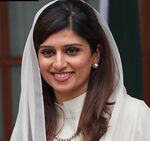 Jayanti Sinha


Grand Assembly

The Grand Assembly met in the Red Fortress of Agra. The issue of succession could be discussed. Mutasim al-Baccus, Mahaan Mansabdar, spoke fervently: "Don't think that this time of relative stability in the Çakari part of the Great Apollonian Empire is a reason to disagree for all eternity! This nation needs a strong leader, someone to lead the people further into the 18th century." Jayanti Sinha, former Grand Vizier, said, "We must do justice to Akbar's legacy. Only His Majesty was not clear about succession. With all due respect to you, Your Majesty Sultana, your children are still too young." Jodha nodded.
"May I ask you, Your Highness, Amir Çakar, are you ready to take the throne?" asked Jayanti. Amir stood up: "When my brother was chosen to be sultan, I was glad that I was not elected. My brother, in blessed memory, made it clear to me several times that the task of sultan is a heavy burden. As a Khan, I taste part of it. That part is more than enough for me". There was dismay among many, for they had placed their hope in Amir. All the delegates entitled to vote filled in their ballot papers. All votes were cast after the ballot papers were collected. The candidates with the most votes were Ümit Çakar, Amir Çakar and Rajesh Avchat. Ümit Çakar, father of Abu and Amir, did not appear to have the support of the delegates who came from west of the Green Border. Amir Çakar received a number of votes, but remained steadfast that he was not a candidate. Rajesh did not get support from the delegates who came from east of the Green Border. The ballot papers were burned so that the delegates were not burdened with their earlier vote.
Since in this case the outcome was not yet decisive, it was decided to at least establish a government. Jayanti Sinha, who had been Grand Vizier earlier, was asked to become Grand Vizier again. She accepted on the condition that she would not become a candidate for ruling sultana. For most delegates, it was out of the question to accept a woman as head of state. As they did not manage to settle the succession, a new meeting was scheduled after a few days of reflection. Although there was optimism about the independent continuation of Çakaristan, there was concern about the vacant throne.


