

Treaty between Bassaridia Vaeringheim and Çakaristan
The Treaty of friendship and cooperation between the Associate Domain of Bassaridia Vaeringheim and the Çakar Empire was signed in Portpur on 11.VII.1746 AN (19/3/51 PSSC) by Merchant General Basilios Barakat al-Moravi, for Bassaridia Vaeringheim, and Şahin Faris, Grand Vizier, for Çakaristan.
Text

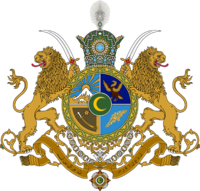
TREATY OF FRIENDSHIP AND COOPERATION
BETWEEN
THE ASSOCIATE DOMAIN OF BASSARIDIA VAERINGHEIM
AND
THE ÇAKAR EMPIRE
Concluded on the authority of Her Majesty, the Merchant General of the General Port of Lake Morovia, acting under the supreme oversight of the Council of Kings of Bassaridia Vaeringheim,
and
His Majesty, Xunpadshahan, Shahanshah of Çakaristan.
Desiring to deepen goodwill while scrupulously safeguarding their respective constitutional, spiritual and security prerogatives, the High Contracting Parties agree as follows:Article I – Peace and friendship
There shall be a firm and perpetual state of peace and friendly relations between the High Contracting Parties, their heirs or successors, and their citizens, without discrimination.Article II – Sovereignty and territorial integrity
Each High Contracting Party shall respect the independence, sovereignty and territorial integrity of the other and shall consolidate relations on the basis of equality and mutual benefit.Article III – Civil aviation overflight
1. This Article applies exclusively to civil, non-state, non-military aircraft registered in the territory of one High Contracting Party (the “Operating Party”) whose point of departure and final destination both lie outside the territorial jurisdiction of the other High Contracting Party (the “Overflown Party”).
2. Such aircraft may overfly the Overflown Party’s airspace, subject to:
a. advance filing of flight plans and transponder codes;
b. payment of the Overflown Party’s standard en-route and air-navigation fees; and
c. immediate compliance with all communications, interception or landing instructions issued by the competent air-defence or civil-aviation authorities of the Overflown Party.
3. Nothing in this Article limits the Overflown Party’s inherent right to declare Restricted or Prohibited Areas for reasons of national security, safety, environmental protection, or sacred-site preservation, nor to inspect, detain or escort aircraft in emergencies or when reasonable suspicion arises.
4. Humanitarian, search-and-rescue, or medical-evacuation flights shall receive expeditious clearance wherever practicable.
5. This Article shall not derogate from any air-policing arrangements or collective-security obligations that either Party maintains with third states or multilateral organisations.Article IV – Diplomatic mission
The High Contracting Parties will maintain regular contacts on matters of mutual interest and will exchange embassies. Embassy premises, associated grounds, vehicles, leading statesmen, official delegations, special envoys and ambassadors shall enjoy diplomatic immunity in accordance with international custom. Each Party recognises the handing over of letters of credence as the proper procedure for acceptance of ambassadors.Article V – Mutual recognition of civil acts
1. Each High Contracting Party shall give full faith and credit to the public acts, records, contracts and judicial proceedings of the other in civil matters—including marriage, succession, property and corporate registrations—unless enforcement would be manifestly contrary to the public policy, constitutional provisions, or Reformed Ritual Code of the recognising Party.
2. Either Party may require authentication or apostille in accordance with its domestic law before recognising extraterritorial documents.Article VI – Interpretation and dispute settlement
1. Any dispute concerning the interpretation or application of this Treaty shall, in the first instance, be resolved by prompt consultation between the Ministries of Foreign Affairs.
2. If no settlement is reached within sixty (60) days of written notification, the Parties shall refer the dispute to mediation under a mutually agreed third-party facilitator.
3. Should mediation fail within a further ninety (90) days, either Party may submit the matter to binding arbitration before a three-member tribunal convened under the Rules of Procedure of the Micras Treaty Organization or another forum mutually agreed in writing. The tribunal’s award shall be final and enforceable.Article VII – Ratification and entry into force
This Treaty shall enter into force upon signature and completion of the domestic ratification procedures of both High Contracting Parties.Article VIII – Review and amendment
1. The Parties shall meet at least every five (5) years to review the operation of this Treaty and may adopt amendments by written agreement.
2. Amendments shall enter into force following ratification in accordance with Article VII.Article IX – Duration and withdrawal
1. This Treaty shall remain in force for an initial term of ten (10) years and shall thereafter renew automatically for successive five-year terms unless terminated under paragraph 2.
2. Either Party may withdraw by giving twelve (12) months’ written notice to the other through diplomatic channels. Withdrawal shall not affect obligations accrued before the effective date of termination.
Signed at Portpur on 11.VII.1746 AN (19/3/51 PSSC),
For the Associate Domain of Bassaridia Vaeringheim: Merchant General Basilios Barakat al-Moravi
For the Çakar Empire: Şahin Faris, Grand Vizier of Çakaristan


