
Flag of Normandie
 Flag of Normandie | |
| Use |
 State flag |
|---|---|
| Proportion | 2:3 |
| Adopted | 1750 AN |
 | |
| Use |
 Civil flag |
| Proportion | 2:3 |
| Adopted | 1750 AN |
 | |
| Use |
 War flag and war ensign |
| Proportion | 2:3 |
| Adopted | 1745 AN |
The Norman flag is the regional flag of Normandie. Normandy uses two flags, the Hurmu flag and the Normandie flag. Both flags are flown simultaneously at all government offices. The first Normandy flag was in 1744 AN, and the current version has been in use since 1750 AN. The Normandy flag is also called the "Two Leopard Flag".
The Norman flag consists of several different colors. The flag features red, yellow, purple, dark yellow, black, white, and gray. On a red background is a lightly outlined purple St. Olaf's Cross (Ortonic Norman: Croix de Olaf). The original Norman colors were purple and yellow. During the Purification of Normandy, the color purple was replaced by red. In 1750, purple began to be used on the flag, becoming the three main colors. Above the cross is a sword positioned horizontally in the center, slightly closer to the left so that it fits within the cross. This sword symbolizes a sword thrust into Vanicism. In the upper left corner is a black outlined Carumid Sun Disc. This symbolizes Karum. On the left are two leopard passants (Ortonic Norman:les p'tits cats), speeding up and down along the Olaf's Cross. The lions have black outlines and purple tongues. These lions are a reference to the Leopard Brothers, founders of the Câthau Dynasty.
The civil flag of Normandie is completely devoid of symbols, with the St. Olaf's Cross slightly closer to the right. Because it was difficult to design or erect a symbolically rich flag for Normandie, the civil flag was frequently flown in villages. Apart from that, there are two leopard passants on a purple background symbolizing Normandie. The number of leopard passants becomes three to symbolize the Duke's flag. The Normandokarum Fyrd flag consists of horizontal yellow-black-blue stripes. The Normandokarum Fyrd logo is in the upper left corner.
The Norman flag holds great significance for the Normandic flag. Normans valued their flag more than their own lives. Damaging the Norman flag in Normandie could result in severe penalties. Flag Day is celebrated every year on April 3rd.
History
Although the Norman flag has many colors, only three primary colors stand out. The heraldic meaning of these colors are:
- Red: Reestablish of Normandie, wrestling
- Yellow: Abundance
- Purple: Nobility
-
 Flag of Quercy County
-
 First flag of Normandie
-
 Second flag of Normandie


State flags
Storish Normandie did not have an official flag. The official flag of Normandie was the Storish flag. But there are a few flags that have been attributed. There were two lions passant on a purple background, and a purple Olaf's Cross with yellow outlines on a purple background.
In today's Normandie, there is two other flags: the state ensign and the duke's flag. The state ensign is sometimes use, though rarely, to symbolize the Normans. The state ensign was, in a way, a banner of arms. The ducal flag consists of three lions and is used by the ducal government. The three lions were also part of the ancient Bosworth-Norman culture. The flag emerged in the thirteenth century.
-
 State ensign of Normandie
-
 Duke flag of Normandie


Lordship flags
There are seventeen separate lordships in Normandy. Four of them are governed jointly with their superior lordship. The flag standards of the lordships are guaranteed by the constitution. The flag ratio is fixed at 3:1, and the flag must be hung vertically. Flags that are yellowed, darkened, or damaged must be replaced. Flags, including the national flag, are lowered to half-mast. The flag should always be ironed.
-
 Flag of Arpad
-
 Flag of Béthencourt
-
 Flag of Beurville
-
 Flag of Casse-glace
-
 Flag of Falaise
-
 Flag of Franciana
-
 Flag of Grenoble
-
 Flag of Grisboeuf
-
 Flag of Hivernot
-
 Flag of Kafiristan
-
 Flag of Karum
-
 Flag of Lunhavre
-
 Flag of Nouveau Bajoccas
-
 Flag of Old Gaol Isle
-
 Flag of Quimper
-
 Flag of Arpad
-
 Flag of Vermandois


Seccesionist or ethnic flags
-
 Flag of Amalandics
-
 Flag of Austrmarkers
-
 Flag of Durntkinstanis
-
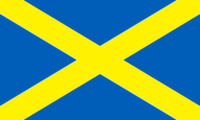 Flag of Hexarchians
-
 Flag of Iridians
-
 Flag of Gralans
-
 Flag of Narmanis
-
 Flag of Karnali
-
 Flag of Karumites
-
 Flag of Kernevons
-
 Flag of Reinish people
-
 Flag of Varjans


Solidarity flags
-
 Flag of Norman police solidarity
-
 Flag of Norman gendarme solidarity
-
 Flag of Norman millirary solidarity
-
 Flag of Norman medicine solidarity
-
 Flag of Norman firefighing solidarity


